
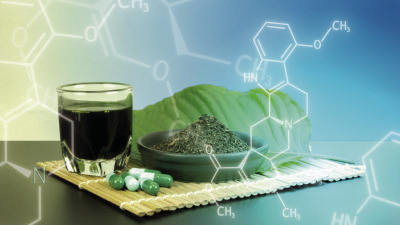
Kratom, a substance that comes from the leaves of a tropical tree found in southeast Asia, has been making the rounds locally as a legally available dissociative often touted as helping with opioid withdrawal, but without risks of its own.
Products prepared from the plant are available throughout the U.S. as it hasn’t been scheduled as any sort of illegal or controlled dangerous substance by the Food and Drug Administration (FDA).
Dr. Mark Holder; who serves as a physician at Sabine Medical Center, as the parish coroner, and as a detective with Many PD; warns locals with what he has seen locally.
“With these products there is no FDA regulation; no safety net; no control by any agency,” Holder said. “There are definite signs of abuse and overdose.”
Kratom is easily found in gas stations and paraphernalia/vape shops in most parts of the country, except in a few localities and states where it has been banned. The substance is gaining attention throughout the state, as well. In the past week, Ponchatoula voted into effect a ban, joining several other local governing like the Ouachita Parish Police Jury, Zachary, and Tangipahoa.
Some choose to buy it online, where Kratom is sold as a “soap-making and aromatherapy” product, to avoid the fact that the FDA made it illegal to import or manufacture kratom as a dietary supplement.
Although the FDA notes that Kratom is often used to self-treat conditions such as pain, coughing, diarrhea, anxiety, depression, opioid use disorder, and opioid withdrawal there are no drug products containing kratom or its two main chemical components that are legally on the market in the U.S.
Known side effects include weight loss, dry mouth, nausea/vomiting, constipation, liver damage, muscle pain, and high blood pressure. Effects on the mind and nervous system include dizziness, drowsiness, hallucinations, delusions, depression, trouble breathing, confusion, tremors, and seizures.
Harvard Health Publishing goes on to say that its two main chemicals, mitragynine and 7-hydroxymitragynine, spur activity at the main opioid receptor, which is the same one stimulated by heroin and oxycodone. However, its effects change with dosage, as taking less causes a stimulating, energizing, and uplifting effect, with higher doses becoming more opioid-like with drowsiness and euphoria.
With such little official research being done, there is virtually no control or reliable information on its growth, processing, packaging, or labeling, which adds a high level of uncertainty to its health risks.
“This is going to become a public health concern,” Holder states. “One person who has been using Kratom for five or six months reports spending $100-200 per day on the drug. Anyone using for that long can expect to have withdrawal symptoms.”
Poison control centers received more than 3,400 reports about Kratom use from 2014-2019, including reports of death. The Center for Disease Control (CDC) claims that between 2016-2017, there were 91 deaths due to Kratom, but to greet that claim with skepticism, as all but seven of the casualties had other drugs in their system at the time of death, making it impossible to solely implicate Kratom. According to the Mental Health Service Administration’s National Survey on Drug Use and Health, an estimated 1.7 million Americans aged 12 and older used Kratom in 2021. Harvard puts usage between two million to 15 million Americans having used it.
Much like treating users of alcohol or illicit street drugs, the community needs to get these individuals help while trying to negate its availability.
“One main worry is the distribution to underage individuals using these products without knowing there is no safety net,” Holder continues.
Many Chief of Police Cheryl Wooley echoed a similar sentiment, in saying that while there are few studies on Kratom, there are no studies regarding what its effect on the developing brain of a juvenile might be.
Both are committed to targeting the problem, which becomes difficult, as even if a ban was enacted inside the city limits of Many, Kratom products are still easily available in neighboring locations or over the Internet.