
Black History Month is the annual celebration of achievements by African Americans and a time for recognizing their central role in U.S. history. Also known as African American History Month, the event grew out of “Negro History Week,” the brainchild of noted historian Carter G. Woodson and other prominent African Americans. Since 1976, every U.S. president has officially designated the month of February as Black History Month. Other countries around the world, including Canada and the United Kingdom, also devote a month to celebrating Black history. (History.com)
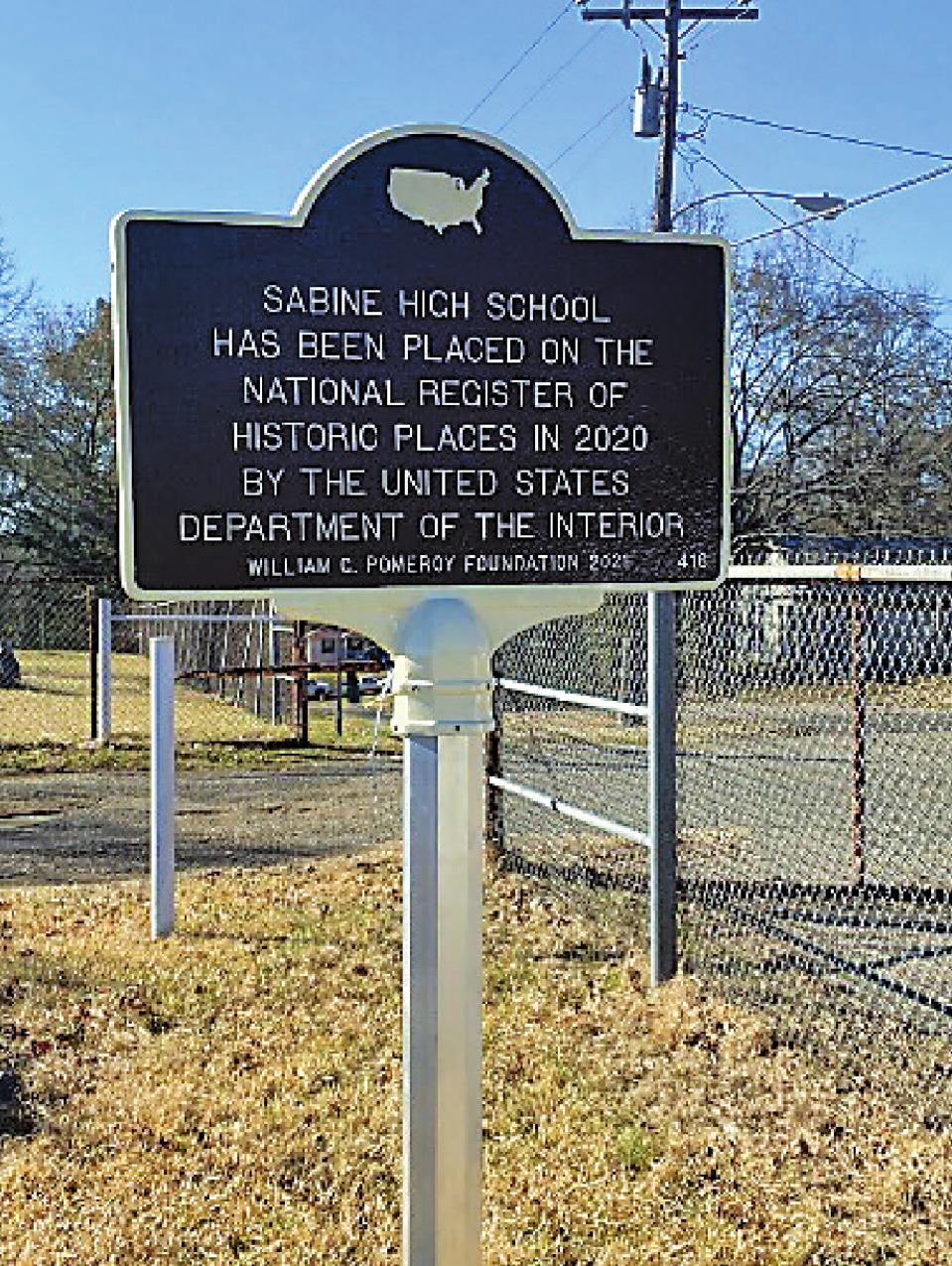
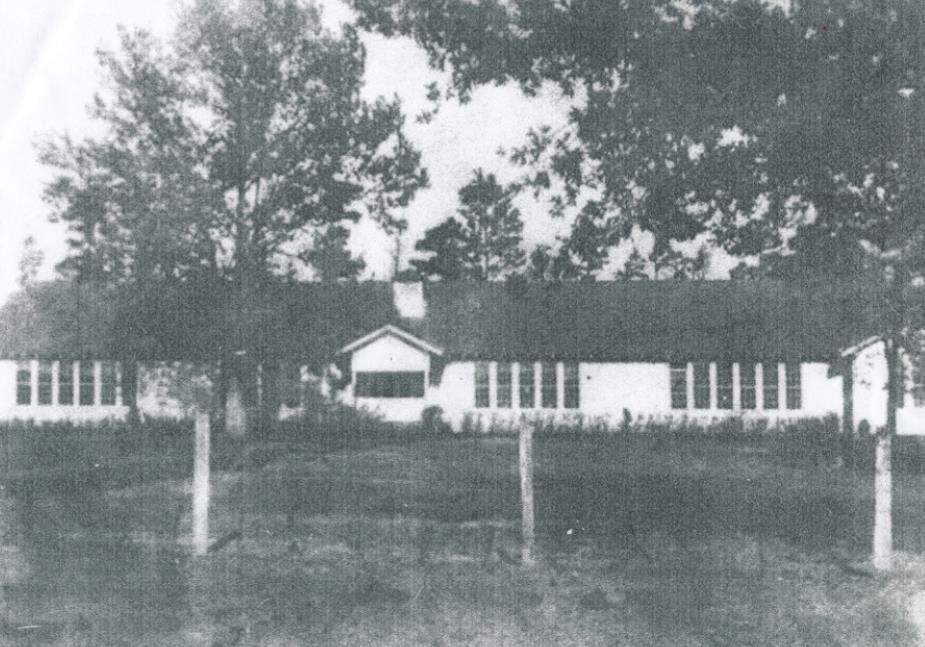
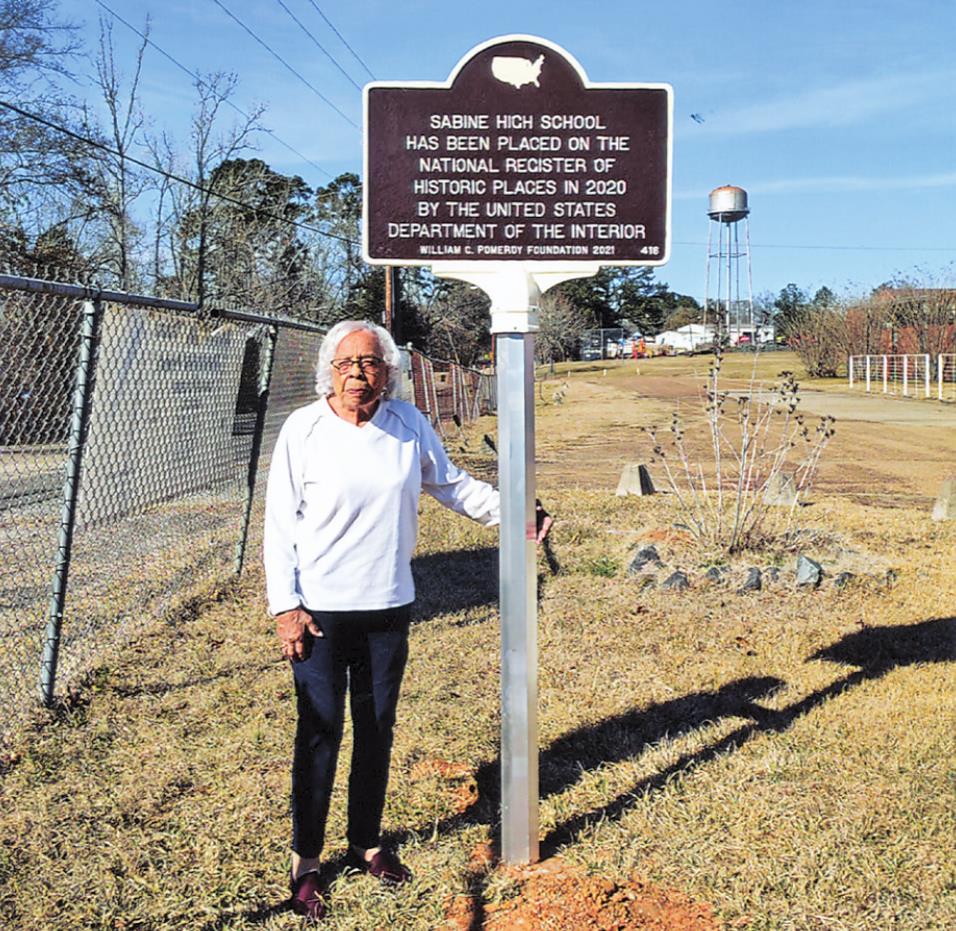
Sabine High School, listed on the National Historical Register of Historic Places, is a significant resource in the areas of education and ethnic heritage, as it provided important educational opportunities for African Americans in Sabine Parish. The existing buildings were constructed in 1957 to replace a circa 1928 Rosenwald School which were schools for African-American students in mostly rural areas constructed between the 1912 and 1932. They were an idea of Booker T. Washington and funded partially by grants from Julius Rosenwald, president of Sears & Roebuck. Matching funds were required by the local community. Sabine High School was desegregated in 1970, at which point the campus became Many Junior High School until its closure in 2001. In honor of Black History Month and the historic treasure that is Sabine High School, the SHSRP Management Group, Inc., the entity comprised of SHS alumni leading the charge to revitalize the school into a much-needed Community Center for Many and Sabine Parish, has graciously provided thoughts to share from Ms. Barbara Lily, Class of 1970, and Ms. Syporia Garner Turner, Class of 1958. The Class of 1958 was the first graduating class at Sabine High School, and the Class of 1970 was the last graduating class. They share their memories with us here.
My Reflections of Sabine High School
Wow! It is unbelievable that Sabine High School located in Many, Louisiana has become a historical landmark. Being proud is an understatement for Sabine High School becoming a historical landmark, the school where I completed my primary and secondary education.
As I travel down memory lane, Mrs. Ida Pugh, my first-grade teacher, was responsible for teaching me how to read. I remember Mrs. Pugh being small in stature, but powerful as a teacher. Other teachers that made an impact on building my educational foundation were Mrs. Lizzie Sweet and Mrs. Palmer. I believe the strong foundation established by my primary teachers influenced the structure that I have in my life today!
As my journey continues down memory lane, I am reminded of the activities at school that we considered so much fun. Simply playing kick ball, running and horsing around with my classmates, and of all things when playing outside, we found enjoyment peeping in classroom windows. As with all children, going to lunch was my favorite time of the day. For lunch, we were lined up to wash our hands before entering the food serving line. Our food servers were always so nice to us as they dished up some of the most delicious food that I can remember eating. The meal was always well balanced with a meat, a starch, and a vegetable. Milk was served with all lunches. I cannot recall any food dish prepared in the cafeteria that I did not enjoy eating.
While dining in the cafeteria, I always chose to dine with my best friends, Jo Anne Gay and Effie Maxie. I cannot recall any of our conversations other than making small talk. Our Principal, Mr. T. A. Maxie often supervised the cafeteria. In my opinion, I thought Mr. Maxie was the tallest man in the world. Mr. Maxie’s office was across the breezeway from the cafeteria. The thought of going to Mr. Maxie’s office for anything was very scary for me. My objective was never to be called to his office for any reason. The sense of fright that I had for Mr. Maxie’s office made me a model student.
On the campus of Sabine High School there were four buildings. Building A was the elementary school, Building B was for the middle school, and Buildings C and D housed the high school. As we matriculated from one building to the next, we felt the growing up process. My sixthgrade teacher was Mr. Holland, and I was delighted to have Mrs. Kennedy as my seven-grade teacher. Life was so simple in Building B. The greatest excitement that we experienced in Building B was walking around the building with our friends while boys passed notes to us requesting to a boyfriend. I considered those days the sweetest days of my life.
Once I left Building B, I was headed to high school, Buildings C and D. I really felt a sense of being grown in the high school buildings. We had some of the greatest high school teachers ever. My high school teachers were Mrs. Evelyn Bush, Mr. McFarland, Mr. Maxie, Mr. Garner, Mr. Ruffin, and Mr. Cross. They inspired us to be all that we could constantly stressing “the sky” was the limit. They knew that education was the key to our success. All our high school teachers equipped us with the tools needed to be effective in the world beyond high school. My favorite class was Home Economics. Mrs. Evelyn Bush was my Home Economics teacher. In Home Economics, we were taught how to cook, sew, and how to conduct ourselves as ladies. Mrs. Bush must have made an impression on my life because my favorite pastime now is cooking.
I cannot end my journey without mentioning my gym class. Of all things, we were taught how to square dance. I thought square dancing was such a fun activity. Square dancing became my favorite activity because it was the first time in my life that I had an opportunity to dance with a boy.
Throughout my school years, I performed well academically. The educational building blocks laid by my teachers from elementary school to high school were very rewarding for me as a student. I finished high school with the second highest grade point average in my class. I was the Salutatorian of the Class of 1970 at Sabine High School.
I started my reflections with the expression “wow”, and I will end with the expression “awesome”. To know that Sabine High School is now listed in the National Register of Historic Places, and I was educated in the sacred walls of this iconic facility is beyond anything I could have imagined. The Class of 1970 closed the chapter of Sabine High School for educating Afro American students in Sabine Parish from 1958 to 1970. Schools were desegregated in 1970 with the name of Sabine High School changed to Many Junior High School. In 2018, a group of former Alumni, Family, and Friends decided to reclaim the school for revitalization. By the grace of God, the SHSRP Management Group, Inc. will be blessed to secure the funds needed to revitalize the campus, so it becomes a tool for not only memorializing, but for looking forward and providing a new place of inclusion and community for the Northwestern Louisiana Region. When revitalized, the Sabine High School campus will once again be a safe and comfortable place for community utilization. By the Grace and Mercy of God, just wanted everyone to know how I impacted the world in which we live. I believe the impact made was based on the educational foundation created by the teachers at Sabine High School.
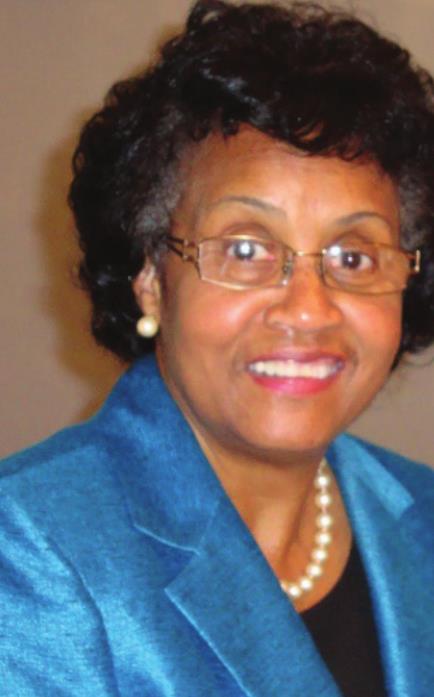
My name is Barbara Hightower-Lilly. I was born and reared in Many, Louisiana. I attended Northwestern State University and retired from AT&T as a Manager of Sales. I worked in Operations of Finance for 30+ years. I have been married for 51 years to Leonard Lilly who was born in Zwolle, LA. I am the mother of two children and the proud grandmother of two grandchildren.
In closing, I feel truly blessed to be an Alumni of Sabine High School, and my life has been GREAT!
Reflections of Sabine High School
“Excellence, Everywhere, Everyday”
I recently saw this tag line on the marquee of a local high school. Reading these words reminded me of my school days at Sabine High School. There are not enough words to truly express how grateful I am to have graduated from a school that provided such an excellent, world-class education.
Although I graduated from Sabine High School in 1958, the school produced many outstanding graduates both before and after my graduating class. The school administration always consisted of well-educated and committed leaders who sacrificed to ensure that teaching and learning was prioritized. These leaders included Professor R.E. Jacobs, Mr. T.J. Simpson, Mr. Stevenson, Mr. S.A. Simmons, Mr. Earl N. Maxie, Mr. M.F. Fortson and Mr. Thomas A. Maxie.
Over the years the school flourished. It was the school for Sabine Parish’s African American students for many years. The students and staff enjoyed many academic and athletic achievements. For instance, Mr. Earl Maxie participated with a group of educators from across the State of Louisiana in organizing the Louisiana Interscholastic Athletic and Literary Organization (LIALO) (aka “The Rally”) under the leadership of Dr. J.S. Clark of Southern University. This organization promoted excellence in all areas of education.
The school’s basketball team participated in the first ever state championship tournament held in 1936 for African American students and hosted by Peabody High School in Alexandria, Louisiana. In 1947, the basketball team won the state championship for the State of Louisiana. The team received an invitation and traveled to Nashville, Tennessee to participate in the National Basketball Tournament where other state championship teams from across the nation gathered to compete. Sabine High School’s opponent was Vashon High School of St. Louis, Missouri. Two members of Sabine’s team were Leon Holland, who several years later became the head coach at Sabine High School and Lee “Nicky” Garner who had a stellar career with the world-famous Harlem Globetrotters. Sabine High School excelled in football as well, winning many district titles and won many trophies during Coach Holland’s tenure.
In the academic field, Sabine High School participated in numerous state competitions winning awards in Mathematics, English, Social Studies and Oratorical Contests. Music education was exceptional as well. Choir and band were taught in the middle and high schools by Mr. Clarence Thomas. Some of the students who excelled were awarded scholarships to Grambling where they played in the “world famous” Grambling Tigers Marching Band.
Graduates of Sabine High School chose various professions. Mr. Earl Maxie became a Professor of Mathematics at Grambling. Dr. Eva Pearl Cole Lewis, Dr. Helen Richards Smith and Dr. Eva Davis Harvey became professors in the School of Education at Grambling. Mr. Otis L. Drew became a Professor of Mathematics at Southern University.
Many graduates went on to become social workers, morticians, attorneys, ministers, school teachers and administrators, business owners, accountants, coaches, law enforcement officers (Theddis Coney became a U.S. Marshall), librarians (Mrs. Eleanor Garner Holland was the first African American librarian in Sabine Parish), nurses, physicians, politicians, school board members and military personnel (Ambrose Gassaway, class of 1967, paid the ultimate sacrifice in Vietnam on July 4, 1969).
The recently installed historical marker on the campus of Sabine High School is a great reminder of the contributions that were made to The Town of Many, Sabine Parish, The State of Louisiana and throughout the Nation by so many of the school’s graduates.
Special thanks to Mayor Robert Hable, Jr. and Suzanne Williams, Grant Writer and Community Development. Your assistance on this project to get Sabine High School placed on the National Register of Historic Places 2020 was invaluable.
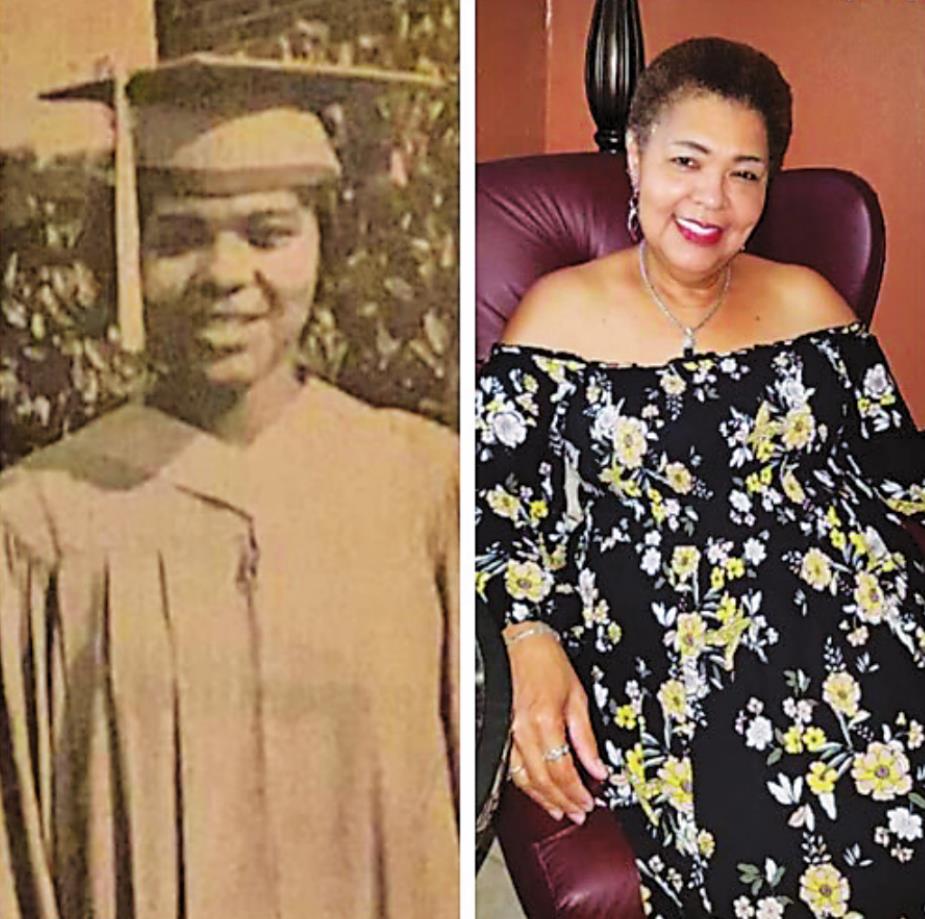
Syporia Garner Turner
Class of 1958
Reflections of growing up in Many By Evelyn Bush
I am going to share some memories of my childhood and life experiences in my hometown of Many.
I was the fourth child of Samuel Fermon Newton and Mattie Alma Brewster Newton. My parents met each other in high school in Homer. Now, I am the lone surviving sibling of the family as Donald, Samuel, Goldie, and Vernell have all deceased.
We lived in the yellow and green house on Georgia Avenue until my mother passed away in 1931. We were raised by my grandmother Nettie Newton, who lived in the home where I presently reside now. In 1940, my father built the home next door to mine.
Our family raised chickens and this was usually our Sunday dinner after church. They also provided us with the eggs we ate. My father purchased a cow, and he and my grandmother milked the cow daily
My sister, Goldie, and I had to do the churning to get the butter and buttermilk. Each year we had a garden to college the fresh vegetables that we ate year round.
Today, we still have our well that provided us with well water that we used for drinking, cooking, bathing, and washing clothes in a number two tub.
During the winter months, we took our baths in front of the wood heather in the bedroom that kept us warm during those cold nights.
The number two tub was used to wash our clothes, and there were four steps involved in getting them hung out on the clothesline.
There were only two black churches in Many, New Jerusalem and the Kings Chapel AME Church. The Methodist church was located near the Holland House. New Jerusalem still resides in its original location on Martin Luther King Jr. Drive. In 1935, my home hurch, Bethel Baptist, was constructed.
School was the joy of my life because we did not have much homework to do each day. The school back then was a two-story building and Julius Rosenwall helped to get the building erected for Sabine Parish.
In later years as the student body increased, two additional wings were added to accommodate the growth.
My siblings and I attended school each day, walking in rain or sunshine for seven months of the year. Some families who lived four or five miles out of town had their children walk those miles each school day. Back in those days, it was commonplace for kids to walk from Newton Town and the New Home area.
The grades we attended back then were primmer to eleventh grade. I fondly remember a book that I had about a boy and girl, and their horse. It said, “Clippy clap, clippy clap, Bob and Nancy can ride.”
Thad Holland from Fisher would bring children to Many each day in his truck. Families had to pay a certain amount of money each week for their trips.
We were fortunate that we had elementary schools in the following towns, and kids could attend there. They were in Fisher, Florien, Gandy, Negreet, Pine Flat, Zwolle, and Pleasant Hill. If they wanted to attend high school, they had to come to Many.
When it came time for lunch, we carried our own lunch to school. We could buy a loaf of bread for 10 cents to make our sandwiches. Sometimes kids less fortunate than us would steal our lunch from us. No hot plate lunches were ever served while I was in school.
I was a member of the Sabine Blue Waves girls’ basketball team, and we won the district title and advanced to Southern University for the state championship. The uniforms were a white midblouse and black bloomers with white tennis shoes.
We did not have a gymnasium back then, so all of our games were played outside, along with the boys’ games, which followed ours.
The junior and senior prom was held at Grady Levo’s café and was the highlight of my junior year. It was held on the high school campus my senior year.
My senior year I was crowned Miss Sabine High because of a fundraising campaign. Graduation exercises were held at New Jerusalem and Bethel Baptist Church. I was the valedictorian of the class and Very Lilly Blinks was the salutatorian.
After graduating from Sabine High in 1943, I attended Southern University in Baton Rouge from 1943-1945. I then transferred to Tennessee State University in Nashville, Tennessee, in 1946 and graduated in 1949. I was so proud to have my grandmother Nettie Newton attend my graduation ceremony.
Clarence Thomas was one of the best music teachers in the state of Louisiana and was a graduate of Sabine High and Southern University. He then returned to teach at Sabine High. He was instrumental in organizing the Blue Wave Band, the homecoming activities, and the parade held in town.
Coronation for the king and queen for Homecoming was a yearly highlight on campus. The young lady who raised the most money was crowned the queen.
The students in home economics made the attire that the queen wore for the ceremony. It was made of royal blue velvet material and the lining was white satin. There were white pearl beads around the edge of her train.
Many stores in downtown closed for our homecoming parade.
In 1949, our Blue Waves basketball team won the Louisiana state championship and came to Nashville to play in the national tournament while I was at Tennessee State. The head coach was Earl Lapierce.
After graduating, I returned home to Many and became the home economics teacher at Sabine High.
One of my favorite foods, hot tamales, were introduced to Many when a gentleman named “Hot Tamale” Brown and his wife opened up a café. My sister, Goldie, was hired to help make the hot tamales and we surely enjoyed eating them.
In 1952, I became the wife of Arthur James Bush. We had three children: Linda, Carleece, and Lew. In 1967 we moved from Lincoln Avenue to my current residence on Church Street. Both of my sons are college graduates and hold master’s degrees from Northwestern State and McNeese State.
These are the places that I have traveled on an airplane: Nashville, Baltimore, Detroit, Cleveland, Los Angeles, Oakland, and Hawaii. I also have a picture of the area where the Japanese were flying over for the beginning of World War II. I have also gone to Canada, and had the opportunity to cross the Ambassador Bridge that connects Detroit and Windsor, Canada.
On June 10, 2018, my beloved husband passed away in Bossier City.