
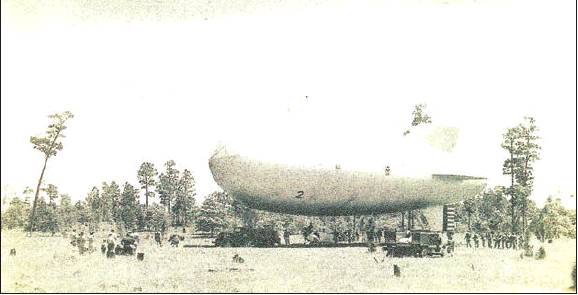
Throughout the history of warfare, armies have needed to observe the troop movements of the enemy. Every high point was used to try and see any movement of the enemy. Dating back to the Civil War both the Union and Confederate Armies used balloons to look and see if they could see any movement of the opposing forces. The balloons were fitted with a basket and officers with field glasses would be raised high above the battle lines to look for any activity. If seen it would drop messages to the handling crew on the ground. These messages would then be carried to the commanding officer so he could plan an attack.
Being in the balloon was dangerous due to high winds breaking the ropes that tethered the balloon to the ground but also every observation balloon would be fired upon by sharpshooters. Many were actually shot down after being hit by rifle fire and many crewmen were wounded and killed. By World War I the U.S. Army had a small fleet of balloons used for observation so that commanders could keep an eye on German troop movements and the locations of machine gun bunkers and artillery batteries. But these balloons were different from the Civil War balloons in the fact that they were motorized and could attain very high altitudes. Since they were motorized they could fly over the front lines and come back with up to date intelligence. But in World War I the Germans, British, French, and American Air Corps pilots were always on the lookout for blimps as they were known. If they could find one it would be attacked so that hopefully it could be shot down and destroyed. But all the armies to protect these blimps would have aircraft flying cover for them. Many great air battles in World War I took place against blimps.
To read more please log in or subscribe to the digital edition http://www.etypeservices.com/Sabine%20IndexID378/